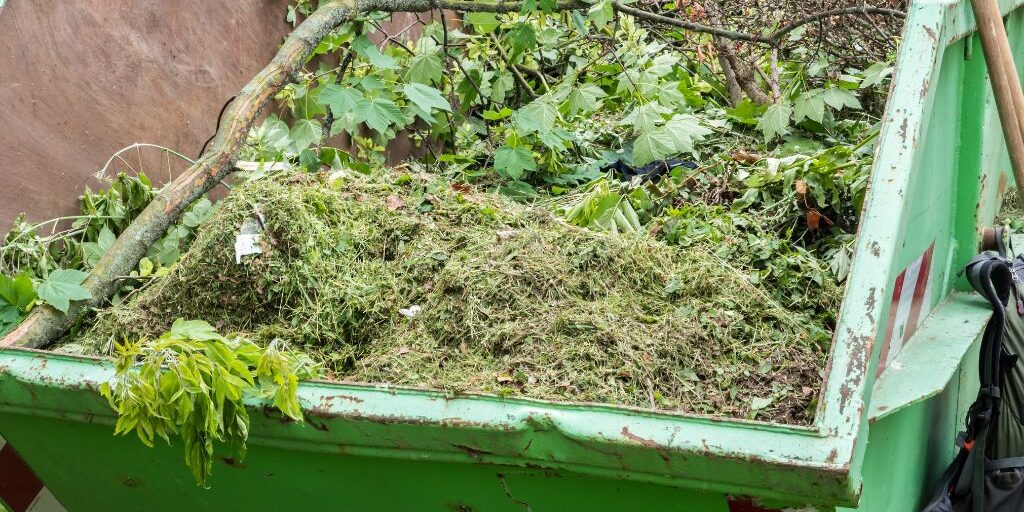
Whether you’re digging out an old patio, ripping up tired turf for a new lawn, or clearing years of overgrowth, garden projects have a habit of producing far more waste than anyone anticipates. Soil, turf, branches, paving slabs and fencing panels can pile up quickly, and working out how to get rid of it all responsibly is often the part of the job people find most stressful. This guide walks through the practical side of garden waste disposal, including which materials can go in a skip, how to choose the right size, and why skip hire tends to be the easiest option for landscaping and garden clearance projects.
Why Does Garden Waste Need Special Consideration?
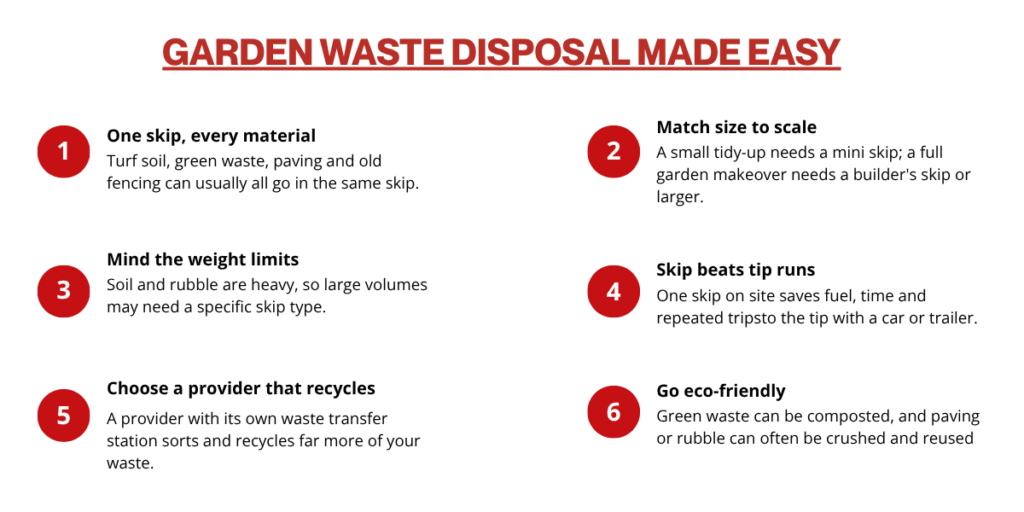
Garden waste isn’t quite the same as household rubbish. Soil, turf and green waste are heavy, bulky and can be awkward to store or transport, especially in larger volumes. Some materials, like soil and rubble, also have weight restrictions that affect which skip size is appropriate, since overloading a skip can be unsafe and may not be collected. On top of that, green waste needs to be processed differently to general waste, ideally being composted or recycled rather than sent to landfill, which is why choosing the right waste disposal route matters for the environment as well as convenience.
In short: garden waste is bulkier, heavier and more varied than typical household rubbish, so it needs a disposal method built to handle it properly.
What Types of Garden Waste Can You Put in a Skip?
Most garden and landscaping waste can go straight into a skip, making skip hire one of the most practical options for a garden overhaul. This typically includes:
- Turf and topsoil from lawn renovations or new planting areas
- Green waste such as branches, hedge cuttings, leaves and shrubs
- Old paving slabs, block paving and broken patio stones
- Timber fencing, posts and panels being replaced
- Decking boards and other garden structures being removed
It’s worth noting that some skip hire companies separate soil and rubble into their own category due to weight limits, so it’s always worth checking before you fill a skip with heavier materials like paving or large quantities of soil.
In short: the vast majority of garden project waste, from turf to old fencing, can be placed in a skip, though heavier materials like soil and paving may need a specific skip type.
What Size Skip Do You Need for a Garden Project?
Picking the right skip size makes a real difference to both cost and convenience. Too small, and you’ll end up needing a second collection; too large, and you’re paying for space you don’t use. The table below gives a rough guide based on typical garden project sizes.
If you’re tackling a bigger job, such as a full landscaping project involving both hard and soft materials, it may be worth reading our guide on large skip hire for more detail on sizing and placement.
In short: matching skip size to project scale saves money and avoids the hassle of arranging additional collections.
Why Is Skip Hire More Convenient Than Multiple Tip Runs?
Loading up a car or trailer for repeated tip runs might seem like the cheaper option at first glance, but it rarely works out that way once fuel, time and tip fees are factored in. A skip stays on site for the duration of your project, meaning you can dispose of waste as you go rather than storing it in bags or piles around the garden. This is particularly useful for projects that run over several days or weeks, where waste builds up gradually. It also removes the need to transport heavy materials like soil or paving yourself, which can be both time-consuming and physically demanding.
In short: a single skip on site saves time, effort and money compared with multiple trips to the tip.
How Can You Dispose of Garden Waste Responsibly?
Once your skip is collected, responsible disposal is just as important as getting the waste off site. Green waste should ideally be composted or recycled rather than landfilled, and materials like paving and rubble can often be crushed and reused. Choosing a provider that operates its own waste transfer station means your garden waste is properly sorted, with as much as possible diverted away from landfill and processed for recycling or composting. This is a key part of eco-friendly waste removal and helps reduce the overall environmental impact of a garden project.
In short: working with a provider that sorts and recycles waste at a dedicated facility ensures garden waste is handled as sustainably as possible.
Ready to Clear Your Garden Waste?
If you’ve got a garden or landscaping project on the horizon, getting the right skip in place from the start makes the whole job easier. Get in touch to talk through your project and find the right skip size for your garden waste, or call 028 90111111 to speak with the team directly.